Classical Music Stories

Classical Music Stories #1: Anna Karenina (Part 2)

b61103d3b08e7d82_landing

First, I forgot to mention something in my last post: the way I’m describing and “interpreting” the music should be understandable by anyone and everyone.  You don’t have to know anything about classical music in order to “decode” the emotions or actions it’s communicating.  That famous quote about music being a “universal language?” Well, there’s some truth to that.

There are, however, some requirements for understanding the music, which I will go into now:

  1. Have you grown up within a Western musical culture? (Ex: Do you listen to pop or rock music? Have you ever seen a movie that used a soundtrack in the background? Have you ever watched TV or seen commercials that use music?)

Yup, that’s it.  That’s all you need.  You’ve been trained your whole life to recognize “happy” and “sad” music, and in general to connect certain types of music to certain types of feelings or actions.

Okay, time to get off my soap box and just tell you the story:


Holberg Suite, Op. 40: II. Sarabande (Andante) by Edvard Grieg

General Story:

The opening theme is so hopeful and beautiful (have I mentioned how much I LOVE this piece?)—it sounds like someone is daydreaming and/or in love.

(0:55) It’s not all daisies and sunshine, though. After all, if someone’s filled with hope then they Continue reading “Classical Music Stories #1: Anna Karenina (Part 2)”
Classical Music Stories

Classical Music Stories #1: Anna Karenina (Part 1)

http://www.gstatic.com/hostedimg/a9ff36c9463a08a7_landing

I’ve dealt with this idea a little in previous posts, but now I want to address it head-on:

classical music tells a story.

It has characters and actions, plot twists and classic endings, heroes and villains.  Of course, since music is so abstract it doesn’t tell a specific story (most of the time).  But that doesn’t mean that you can’t use your imagination to hear one if you want to.

I think the simplest way to think about it is to imagine that the piece you’re listening to is actually the score of a movie adaptation of a book. I know, I know, books turned into movies aren’t always the best…but here’s your chance to do it correctly inside your head. Who would the characters be? What would they be doing? You’re basically Continue reading “Classical Music Stories #1: Anna Karenina (Part 1)”

Music

Did You Know That Classical Composers Were Superheroes?

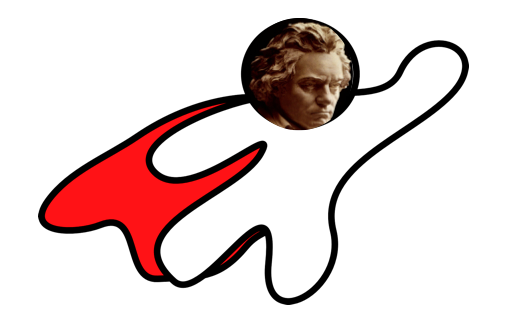
Screen Shot 2015-08-03 at 2.18.27 PMLudwig van Beethoven: Mind control

How else could he have ignited the fierce battle that took place between Brahms and Wagner? They were both so obsessed with pursuing Beethoven’s legacy that they must have been under his power.

But before you go thinking he’s a supervillain like Loki, he also wrote some pretty different music that stretched the boundaries of what was acceptable at that time, and everyone loved it. We still love it today. So he used his powers for good, too (wait…could we still be under his superhuman influence??).

W.A. Mozart: Super speed Continue reading “Did You Know That Classical Composers Were Superheroes?”

Music

Valley of the Bells

In classical music, there’s a good chance that you’ll hear the opening music return at the end. It might be: A) literally repeated note for note or B) altered in some way (but let’s keep this second type under the “repetition” umbrella, too, for simplicity’s sake).

TIME OUT for a delicious food analogy:

Opening and closing music = outer donut      Middle music = custard filling

Okay, so why do composers repeat the opening music?

Well for one thing, I think music sounds differently each time it comes back, even if it’s repeated note for note. It’s like when
you go on vacation. You start out at home, go someplace else for a while, and then return home. I don’t know about you, but home always feels different by the time I get back (sometimes in a good way and sometimes in a not so good way if I really enjoyed the vacation).

Continue reading “Valley of the Bells”

Books

What if the characters from Alice in Wonderland played sports?

Screen Shot 2015-07-27 at 2.06.10 PM

Alice: Obstacle course racing
Just like in Wonderland, she wouldn’t be fazed by anything in her way. Responding to the unexpected without letting it slow you down? Alice has that covered.

The White Rabbit: Track
Because he knows that the faster he runs, the less late he will be.

The Mock Turtle and the Gryphon: Ice dancing
After they danced the lobster quadrille for Alice, they discovered their passion and began to compete.

The Dormouse: Ski jumping
You might not have considered the dormouse as the athletic type. After all, he’s virtually always sleeping. But the truth is that his lethargy has caused him to perfect the art of getting the most out of a single effort. A.K.A. covering as much ground as possible in a single jump.