Books, Music

Music In Wonderland: The White Rabbit’s Proof (Final Part 4)

[Alice asks the White Rabbit her final question about the relationship between stories and classical music.  If you missed Part 3, you can find it here.]


I just have one more question, Rabbit Dear.

What is it?

I understand that a tapestry can become a table, and a table a tapestry, but why should I bother with them when you are so much smarter than I and so know the tapestry’s benefits as a tablecloth much more than I? (It is true that the White Rabbit was never averse to a bit of flattery, but here I simply said what I thought.)

Why my dear, even if I am a bit better at the table-tablecloth conundrum (he did look a bit smug, though perhaps that was simply a result of using the word “conundrum”), seeing the tablecloth on top of the table is a valuable skill!

Why? 

Because tables are notoriously persnickety! One never knows where they’ve been and where they’re going.[1]

(I had always suspected this very thing of tables, and now here Continue reading “Music In Wonderland: The White Rabbit’s Proof (Final Part 4)”

Books, Music

Music in Wonderland: The White Rabbit’s Proof (Part 3)

[Alice and the White Rabbit discuss the value of literary connections to classical music.  You can catch Part 2 here.]

I was a bit sleepy at this point from the tea, but as the Rabbit kept talking and as I liked to listen, I pinched my arm a few times and managed to stay awake.

Now my dear, do you think the Cow destroys the moon when he jumps over it in the music?[1]

I suppose he might…

But when you place a tablecloth on a table, like this one here, does there cease to be a table?

Why of course not!

 Does the table cease to be necessary?

I should say not! Without the table, the tablecloth would not be a tablecloth anymore, but just a cloth! (In reality, the tablecloth was just a cloth—rather a blanket that Continue reading “Music in Wonderland: The White Rabbit’s Proof (Part 3)”

Books, Music

Music in Wonderland: The White Rabbit’s Proof (Part 2)

[Below, the White Rabbit begins asking Alice questions as they discuss classical music.  If you missed Part 1, you can find it here.]

ONE

To start, my dear, how do you read a book?

Why, from left to right of course.

And do you start at the middle and read from Chapter 3 straight on to Chapter 57 and back to Chapter 34?

Why, certainly not! (I huffed.)

Well why ever not?

One simply can’t jump around in “The Cow Jumped Over the Moon.” Otherwise, the Dish would have run away with the moon while the Cow laughed at the Diddle Dog.

Quite right, my dear—well said. Well then, how do you listen to music?

…The same way I read a book, I suppose.

 Very good—very good. Now, if you read a book in order and listen to music in order, what does that say about the book? Continue reading “Music in Wonderland: The White Rabbit’s Proof (Part 2)”

Books, Music

Music in Wonderland: The White Rabbit’s Proof (Part 1)

You know, when I listened to music I never knew what was down from what was up, or what was up from what was down, or down was what or up what was down…oh, what to do! But you see, later when I met up with the dear White Rabbit (we had a spot of tea, though I don’t much see the point in having only a spot when you can have the whole thing), he explained it this way:

My Dear Alice, he said (he was quite fond of me the poor dear, and even more so when I fixed him up about the spot of tea), I don’t know a fugue-ata from a varicaglia,[1] but I do know Tweedle Dee from Tweedle Dum (I’m afraid I still do not!), the Mock Turtle from the Mad Hatter, the birthday cake from the…where was I?

The fugue-aglia?

Oh, yes! Well, I don’t mind telling you this, though it is strictly forbidden and…
Continue reading “Music in Wonderland: The White Rabbit’s Proof (Part 1)”

Books

A Love-Hate Relationship With Alice in Wonderland

alice-in-wonderland-1253474_1920

What is it about Alice’s Adventures in Wonderland that makes me obsessed with it when I’m not reading it and more calmly apathetic while I am reading it?

Me when I’m not reading it: “Yeeeeessss Alice in Wonderland is the best book ever! I am obsessed.”

Me while reading it: “Yeah, this book is pretty weird and violent.  It’s okay.”

And the cycle continues like Alice falling down a never-ending rabbit hole.

Maybe I’m in love with the idea of Wonderland without being in love with the specific words and stories in the book itself.

Have you had any similar experiences with books? Let me know in the comments!

Books, Classical Music Stories, Music

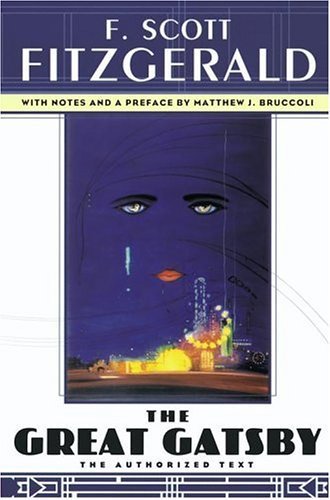
High Schoolers Tackle The Great Gatsby With Classical Music

photo_16696_0This week I had the amazing opportunity to visit a high school English class and do a combined literary and musical activity with them.  They had recently finished reading F. Scott Fitzgerald’s “The Great Gatsby” for class, so I brought in a piece for them to explore in relation to that book.

The piece I chose to play was the first movement of Ligeti’s Cello Sonata (Dialogo).  Before I played it, we made a list on the board of many of the characters from the book.  Then I simply told the students to imagine the music as a sort of movie score as they listened–who might the characters be? What might they be doing?

After playing the music all the way through  (it’s about 4 minutes long), I asked them for reactions.  It started out a little slow, but then things really got rolling.  One student broke the ice by saying he imagined the first chords to be the green light pulsing at the end of Daisy’s dock and that what followed was Gatsby watching that light and thinking about her.  Other students actually said they had the same idea.

Here are some other characters and events some of the students imagined:

  1. Gatsby asking Nick to swim in his pool followed by Gatsby’s death and Nick’s reaction to it all at the funeral.
  2. Wilson finding out about Gatsby’s supposed hand in his wife’s death and preparing the gun that would kill him.
  3. Gatsby and Daisy meeting for the first time at Nick’s house.
  4. Daisy reading Gatsby’s letter after it was too late to take him back.

It was really amazing to hear all of their creative ideas! We barely scratched the surface of this 4 minute piece in the 30 minutes I had with them.

One question I only somewhat rhetorically asked them was how people could imagine such different things in Continue reading “High Schoolers Tackle The Great Gatsby With Classical Music”

Books

If The Big Bang Theory Characters Were Literary Characters

Ever wonder which literary character is most like your favorite Big Bang Theory character? Wonder no more.

Sheldon = Sherlock Holmes

Both of these guys are crazy smart and don’t hesitate to make others aware of that fact. While Sherlock uses his powers to solve crimes, Sheldon has devoted his life to science. Of course, Sheldon probably couldn’t solve crimes even if he wanted to because of how high-maintenance he is. After all, I would imagine that being a germophobe isn’t exactly an advantage if you work around crime scenes. Then again, his OCD would keep him searching until the mystery was solved.

Obviously there are significant differences between the two. If I had to choose which one I’d rather hang out with, it would be Sherlock, though he definitely has his quirks, too. Sorry, Sheldon.

Penny = Anna Karenina 
Continue reading “If The Big Bang Theory Characters Were Literary Characters”

Classical Music Stories

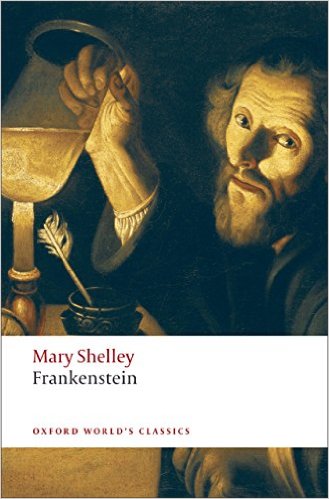
Classical Music Stories: Frankenstein

51HtbmK6dwL._SX327_BO1,204,203,200_

Prelude in G sharp minor

Sergei Rachmaninoff

Walton is approaching the mysterious, unknown North Pole. He has hopeful expectations of what he will find there.

As he continues to approach, there is a real sense of fate or foreshadowing…but Walton himself is engaged in optimistic hope. His daydreams become mixed with the fate theme of the beginning.

But now, Walton’s longing grows, even as he discovers nature and fate’s refusal to fulfill his wishes (descending lines). This leads to his growing fury.

At the climax of the piece, his fate is revealed Continue reading “Classical Music Stories: Frankenstein”

Classical Music Stories

Classical Music Stories: Pride and Prejudice

ba8362fa6919b927_landing

Waltz in E-Flat Major, Op. 18 “Grande valse brillante”

Frédéric Chopin

It is the opening of the Lucas’s ball. Everyone is talking about the rich newcomer and his friend.

We see Jane as she genuinely admires Mr. Bingley: a beautiful, kind, and agreeable girl, though Mr. Darcy’s pride is a bit of a dent in the overall mood.

The music becomes creeping and mysterious as Mrs. Bennett sees Jane and Mr. Bingley together. We keep alternating between Jane and Bingley’s joyful purity and Mrs. Bennett’s clueless Continue reading “Classical Music Stories: Pride and Prejudice”